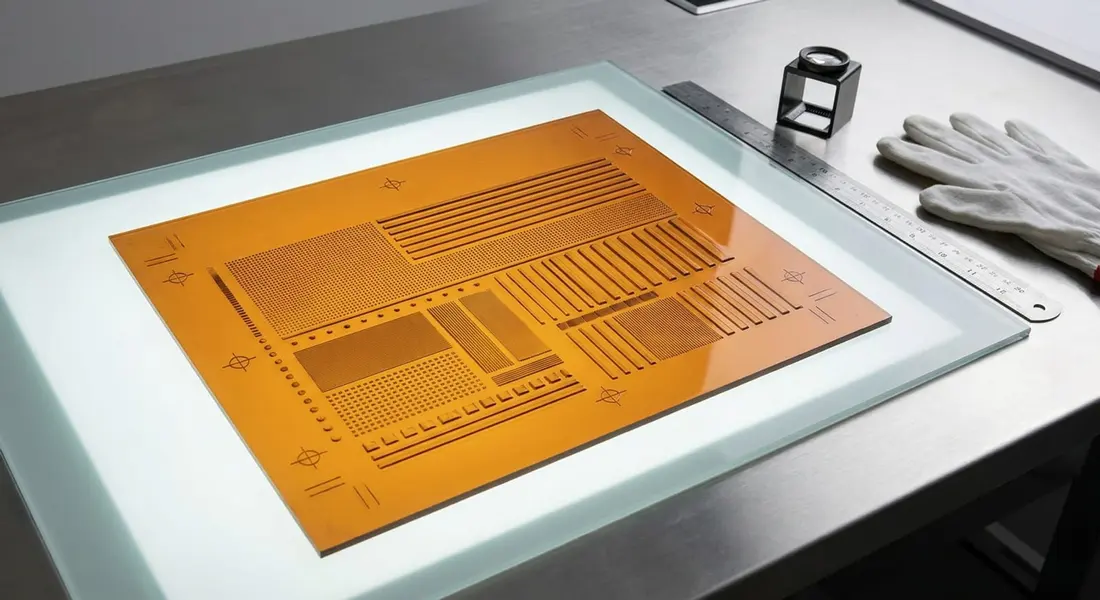
Why in-house photopolymer plates make a difference
• Time — instant corrections and reprints, a shorter lead time before a campaign or reorder.
• Consistency — the same exposure and processing parameters = repeatable colour across successive batches.
• Total cost — fewer trials on the machine, less waste and a faster ramp to running speed.
• Single responsibility — from prepress, through the photopolymer plates, to print and slitting: one team, one standard.
Technology: a dot that holds its shape
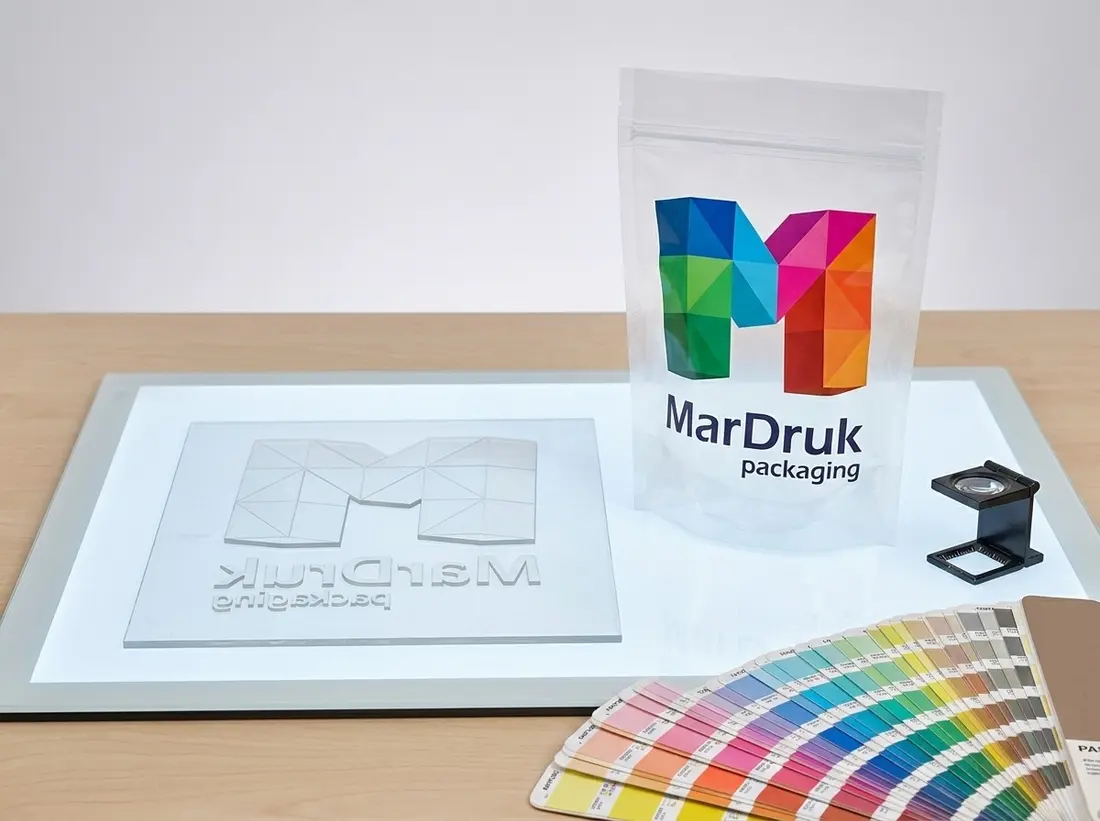
We use photopolymer plates with flat-top dot geometry and halftone dot control from the lowest to the highest tones. The result:
• sharp edges and a stable dot in the highlights (legible fine typography, fine print),
• smooth solids,
• clean tonal transitions on photos and illustrations,
• less muck and easier cleaning during the job.
Prepress for production — from file to plate
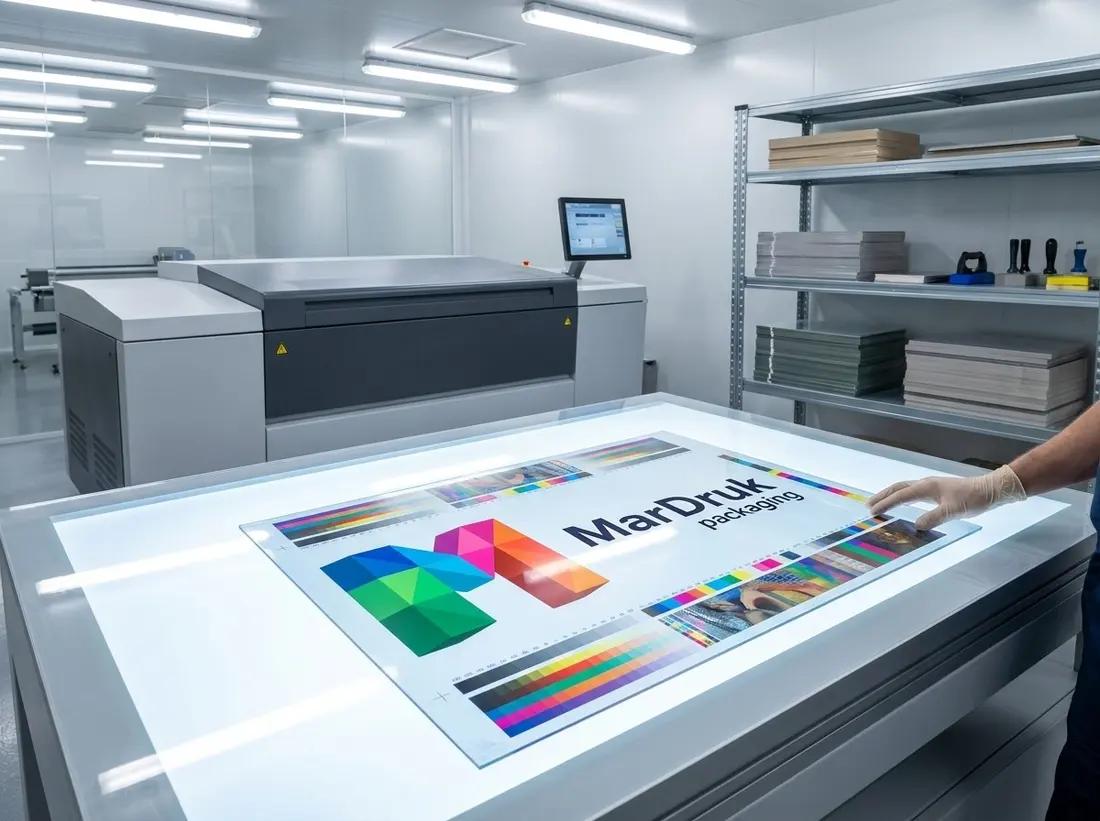
Our prepress team drives the file so that the photopolymer plates reflect the design intent with no surprises on the machine:
• separations and colour sequence set for the geometry of seals, windows and technical zones,
• trapping and white boosting where metallisation or dark backgrounds require it,
• dot-gain compensation for the target speed and substrate (BOPP, CPP, PE, PET, paper),
• mock-ups and a proof (including matt/gloss contrast), so that approval on the desk = the effect on the reel.
Summary — photopolymer plates from a single producer.
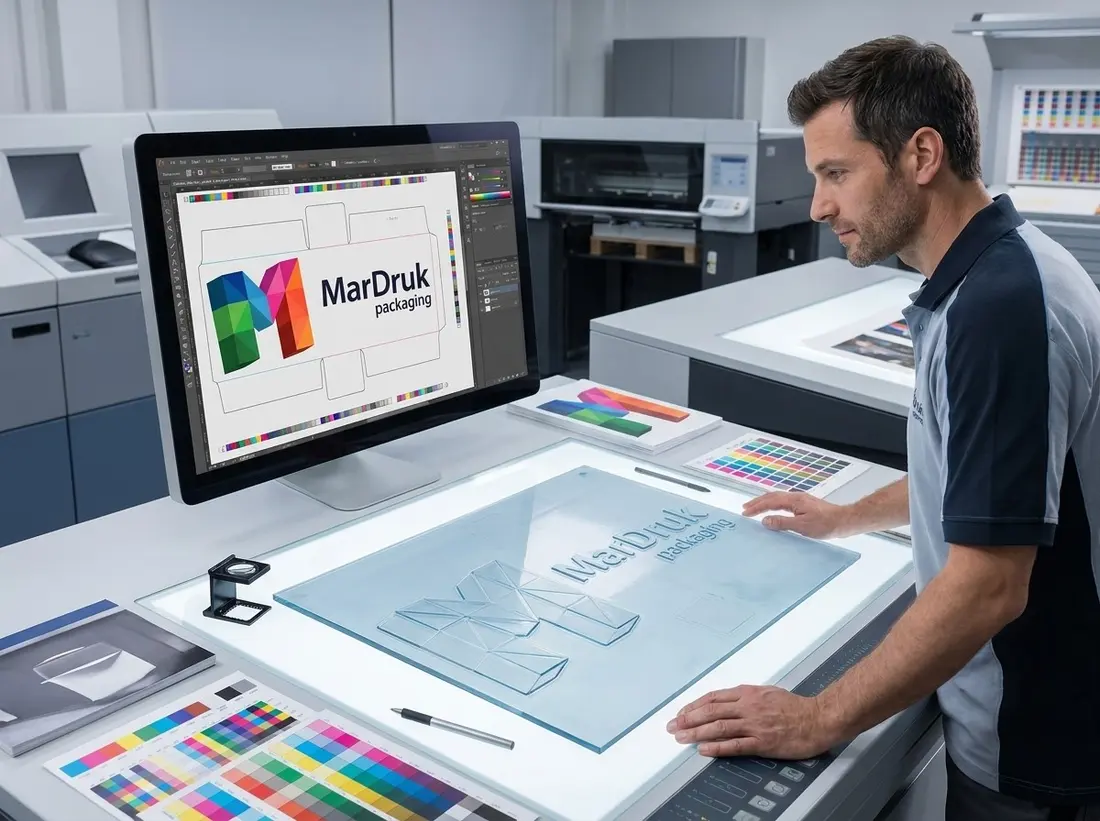
Do you want your line to start up faster, with repeatable colour and detail? Choose photopolymer plates produced by us — with prepress, exposure, mounting and start-up support in one place. We will take care of the dot, the solids and the register so that your pack sells on the shelf and works without surprises on the machine.
Take the next step:
• Order a free consultation and a file audit (separations, white, trapping).
• Order samples/a test plate for your inks and substrate.
• Get a fast quote and a deadline that keeps to the calendar.
Write or call — we will reply quickly and to the point.
Frequently asked questions
Photopolymer plates are printing forms used above all in flexographic printing. They are made from a light-sensitive material which, after appropriate exposure and processing, makes it possible to transfer the image precisely onto the printing substrate.
Photopolymer plates are used mainly for the production of film packaging, labels, bags, laminates and other printed materials. They are an essential element of the flexographic process, because they are responsible for the quality of the reproduction of artwork, text and detail.
The most important advantages of photopolymer plates are high print precision, good reproduction of detail, the ability to achieve repeatable quality and efficiency in series production. Thanks to modern technologies they achieve very good results both on simple projects and on more demanding jobs.
Yes, the quality of the photopolymer plates has a very large influence on the final print result. A properly prepared printing form makes it possible to achieve sharp detail, good tonal transitions, correct colour opacity and high repeatability across the whole production process.
High-quality photopolymer plates help reduce the risk of production errors, improve the stability of the printing process and affect the aesthetics of the finished pack. This is an important element for companies that expect a durable, precise and professional flexographic print result.
Sounds like your project?
Write or call — our technologist will advise on the structure and quote your volume within 24 hours.
Free quote +48 731 819 963 office@mardrukopakowania.pl