Why now
The PPWR regulation makes packaging recyclability mandatory by 2030, and retail chains are already asking suppliers for composition declarations today. Those who move to mono-materials sooner will avoid the panic, the surcharges and the loss of shelf space. MarEco is a ready-made transition path — tested in our laboratory and proven in real projects with over PLN 52 million in EU funding.
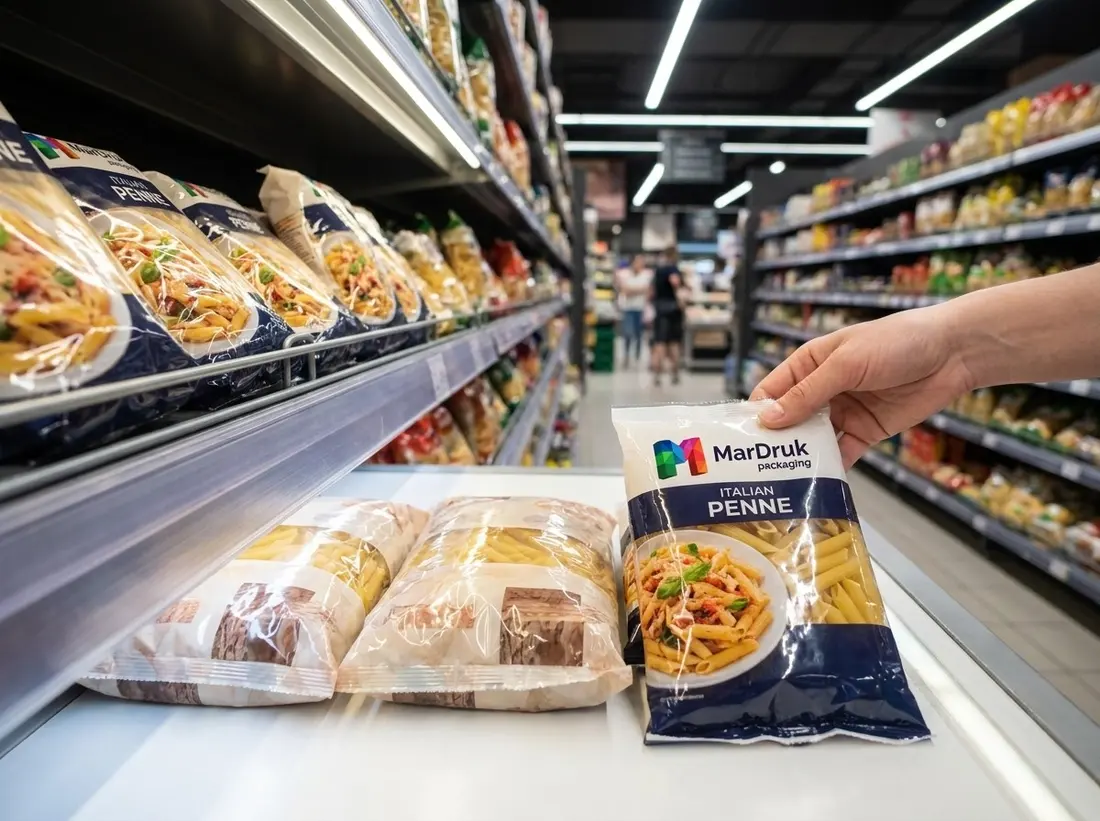
MarEco MONO PP
BOPP/CPP and BOPP/BOPP laminates — a single material, a dominant PP content, designed for recycling in the PP stream; the final possibility of recycling depends on the full packaging composition and on the collection and sorting system available on the target market. Barrier variants (metallisation, ALOx) and high-barrier without EVOH. Applications: confectionery, snacks, dry goods, frozen food. Reverse printing at 150 LPI.
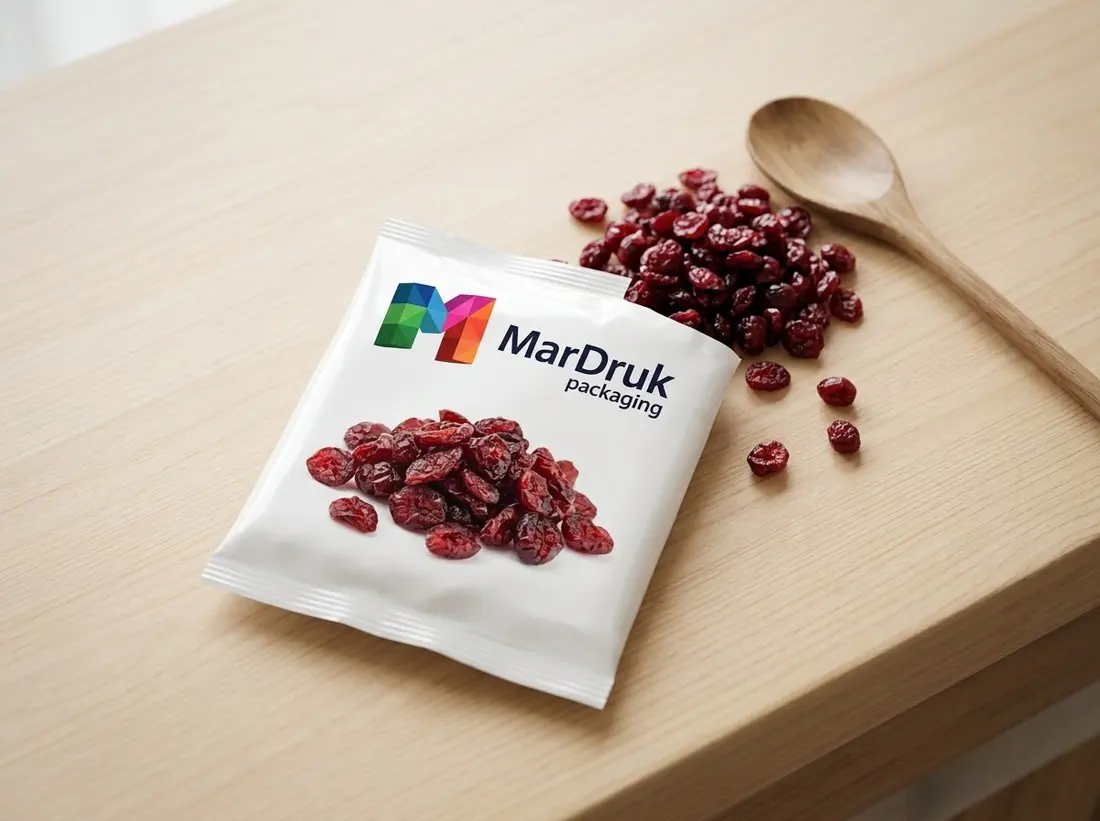
MarEco MONO PE
PE/PE structures for the polyethylene recycling stream — for free-flowing products, bakery and the non-food sector. Excellent sealability on high-speed lines, with an anti-fog option for fresh produce.
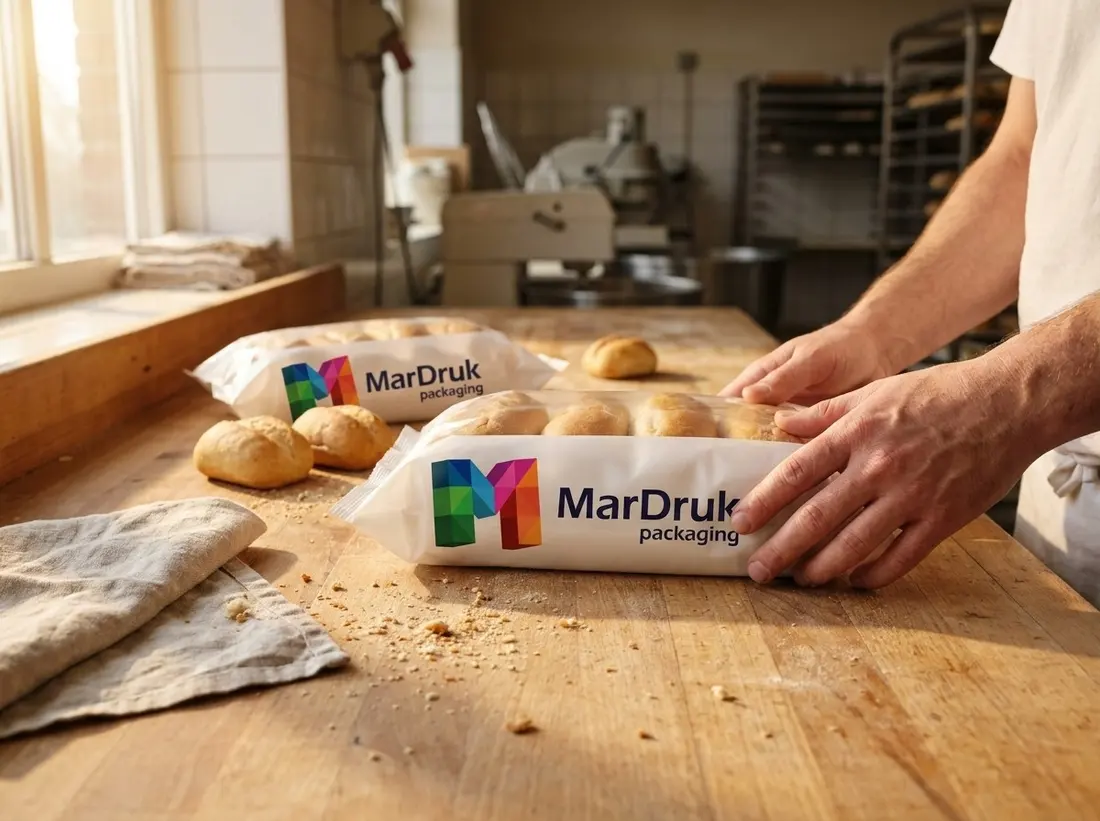
MarEco PAPER
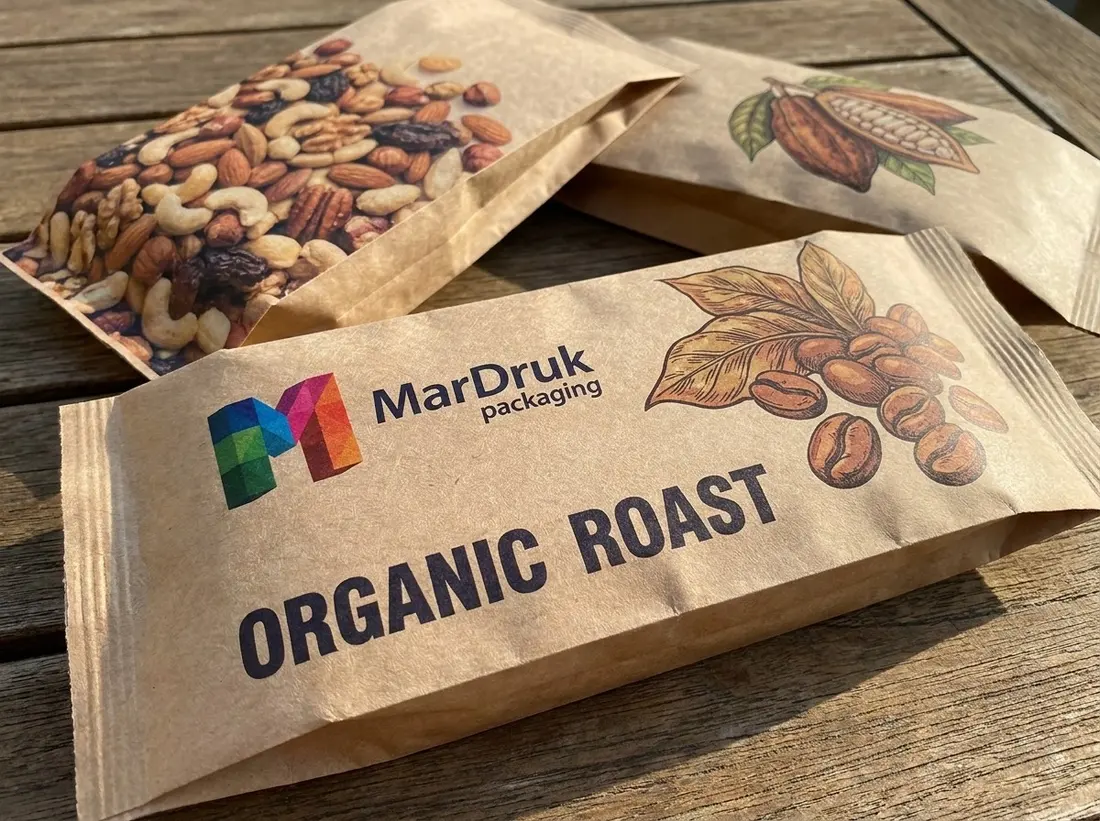
Paper with flexographic print — a natural paper look on the shelf. For brands that want a paper shelf presence without losing product protection.
MarEco COMPOST
Selected materials intended for industrial composting can meet the requirements of EN 13432 — the result of our R&D project with NCBR. Recyclability declarations are prepared from the composition of the specific packaging structure, in line with the rules for environmental claims. For premium products and brands reducing packaging waste.
Composition declarations in black and white
With every MarEco pack you get a material composition declaration calculated from the real laminate structure — a document that supports audit and packaging qualification — we adjust its scope to the customer's requirements. Not promises: migration and barrier test results from our own laboratory.
Mono-material is a process, not an off-the-shelf product
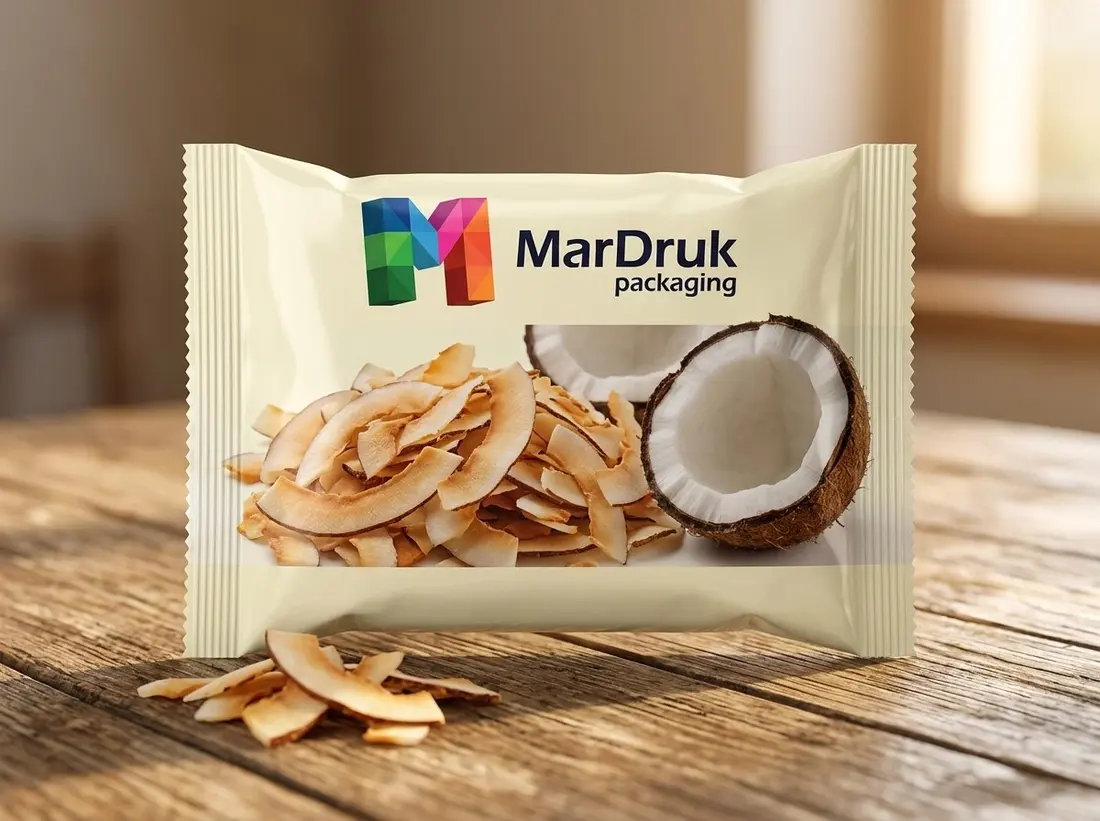
We treat mono-materials not as a 'product' but as a technical process. We advise on the switch from multi-material laminates, select a structure that preserves barrier and functionality, and produce recycling-ready packaging. The biggest risk isn't the change of material itself — it's failing to test it.
What goes wrong when mono-material is chosen by guesswork
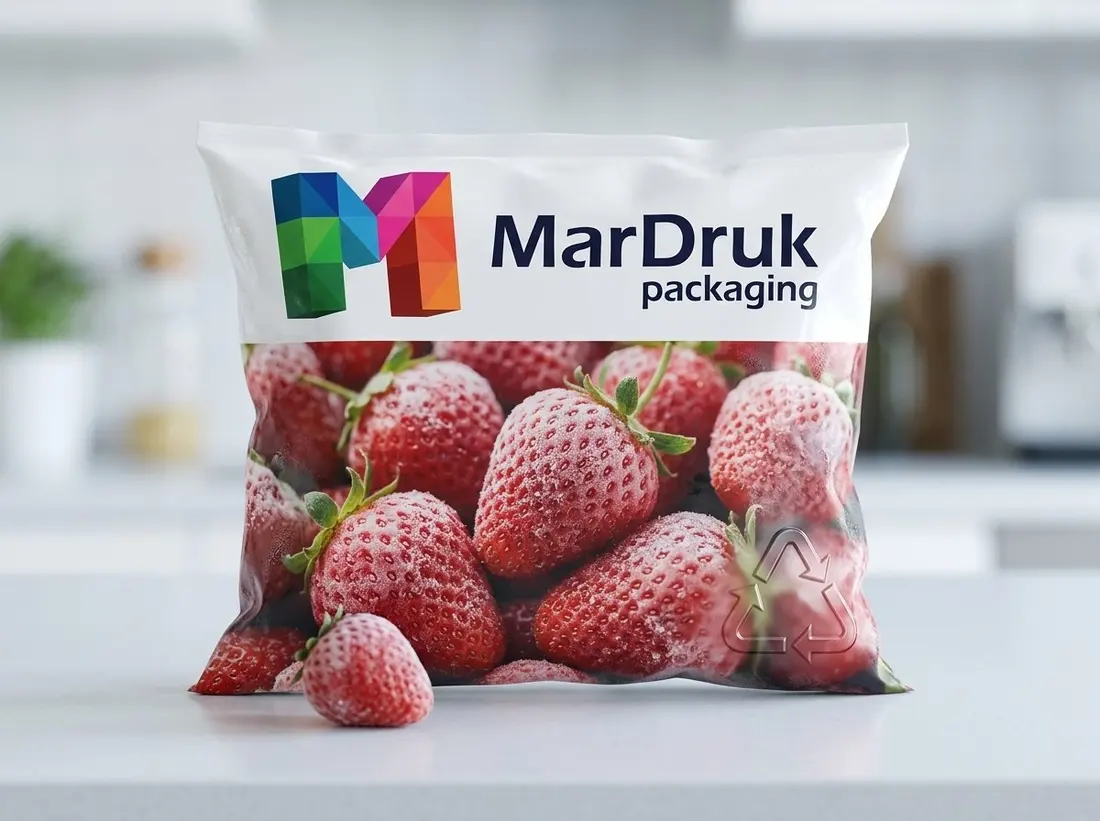
A poorly chosen structure can come back to bite you on the line: film-tracking problems, unstable seals, differences in stiffness, a drop in throughput. That's why we start every rollout with a sample and a machine trial at your site, not with a declaration on a spec sheet.
In stages, not in one leap
The safest approach is a phased one: treat mono-material as a transitional project, test it as an alternative or a backup supply, and protect yourself against a sudden change in the law and time pressure. This minimises the risk of downtime. Those who test in advance don't have to roll out under the pressure of deadlines and retail chains.
Frequently asked questions
When does this take effect?
PPWR makes recyclability mandatory for packaging placed on the market from 2030, and retail chains are asking for composition declarations today.
Will a mono-material keep my product's barrier?
We select the structure to suit the specific product and the required barrier level — and we confirm the result with barrier testing from our own laboratory, not with a promise.
Where do I start?
With a free sample for a machine trial on your line.
Worth reading
 Mono-materials — the future of packagingMono-materials in flexible packaging are no longer a "future" concept. For producers of food, cosmetics and ch…Read →
 PPWR – everything you need to knowPPWR — the key facts for your business. Regulation (EU) 2025/40 (PPWR) introduces significant changes to the d…Read →
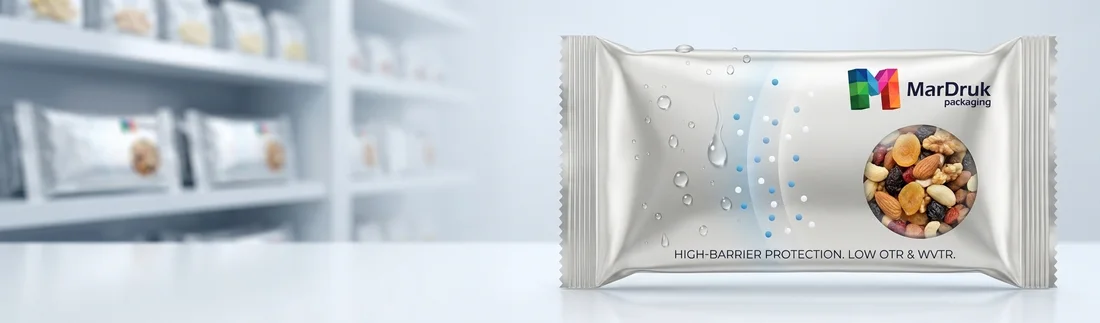 Barrier packagingFor producers and procurement departments, this means making decisions based not on claims, but on measurable …Read →
Sounds like your project?
Write or call — our technologist will advise on the structure and quote your volume within 24 hours.
Free quote +48 731 819 963 office@mardrukopakowania.pl