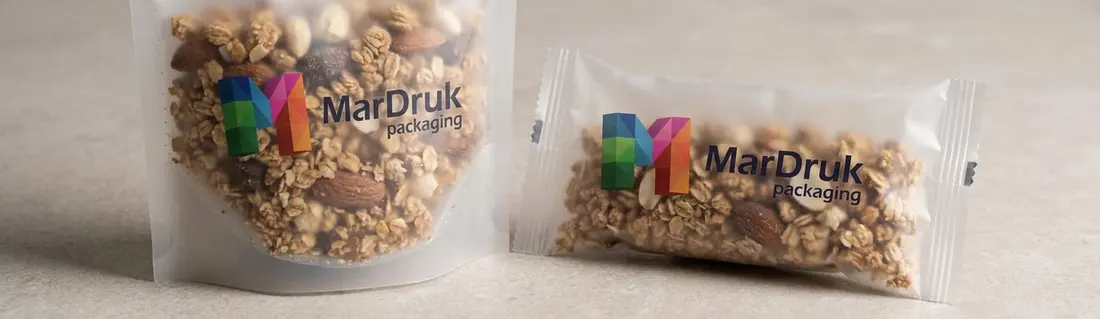
Matt BOPP film — when to choose it instead of gloss or pearl?
It is worth introducing matt BOPP film onto the line when:
• you care about the legibility of small typography and codes in bright light (no 'flare'),
• you want an elegant, muted effect without a 'plastic' gloss,
• you plan a matt/gloss contrast (e.g. a glossy logo on a matt background),
• the priority is brand consistency across different batches and locations.
Matt works best in premium categories: confectionery and snacks, coffee/tea, cosmetics and supplements, pet food and loose products (granola, groats, rice), where perceived quality and a clean reading of the artwork matter.
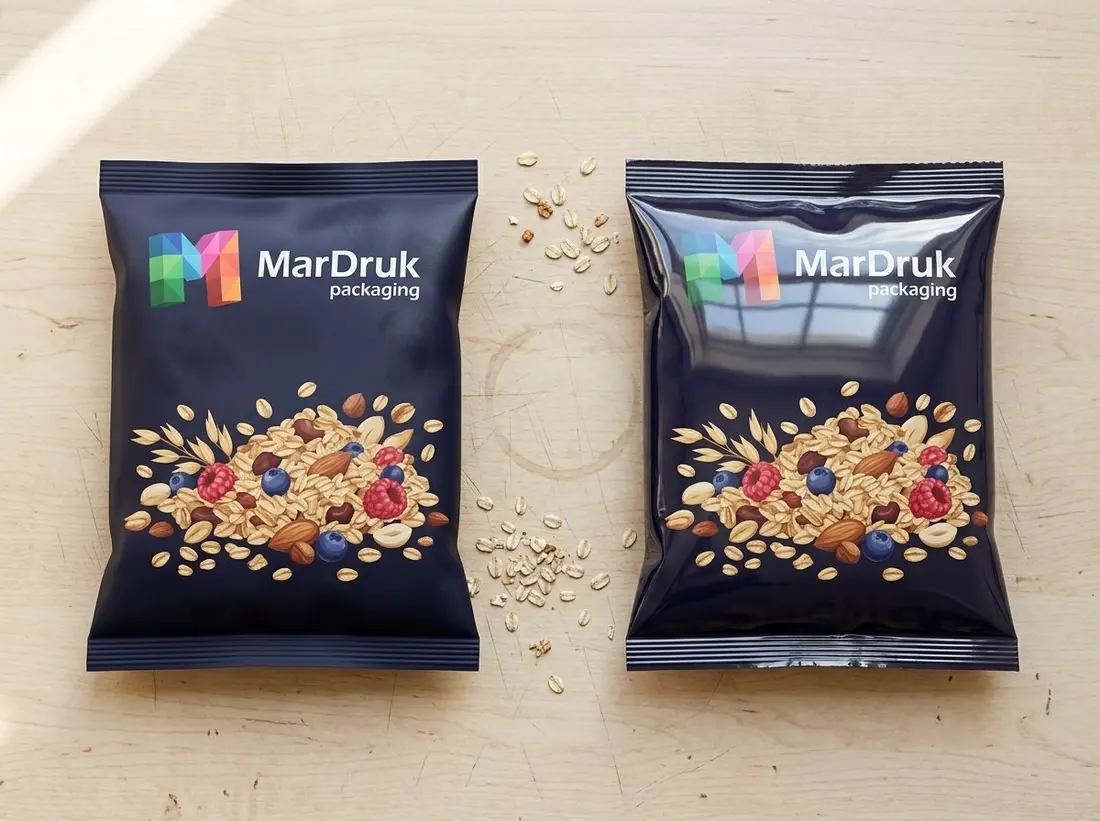
Flexographic printing on matt BOPP film
The matt surface 'carries' colour beautifully. Multi-colour flexographic printing delivers saturated colours, smooth gradients and sharp detail. When designing the layout:
• use a backing white under delicate shades and skin tones,
• plan no-print zones under seals, laser score/easy-open and the date,
• consider selective gloss (varnish/laminate) for the logo and photos — the difference in texture reinforces the premium effect,
• keep safety margins along notch and perforation lines.
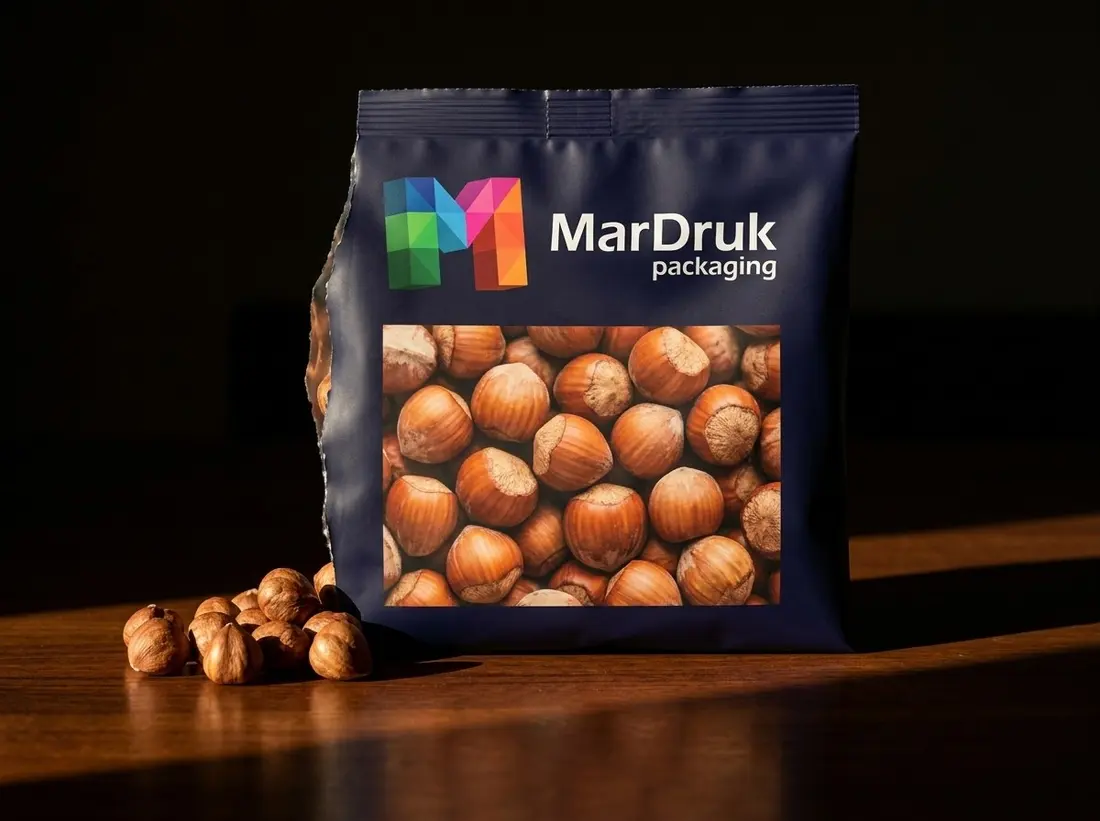
Industry applications — where does matt make the biggest difference?
• Confectionery/snacks: matt reduces reflections, improving how photos and colours read.
• Coffee/tea: paired with a valve and barrier it gives a café premium look on the shelf.
• Cosmetics/supplements: matt is associated with a clean label and a higher shelf.
• Pet food and functional feeds: matt + selective gloss on the logo = a clear content hierarchy.
• Loose products: high legibility of pictograms and tables, fewer reflections under in-store LEDs.
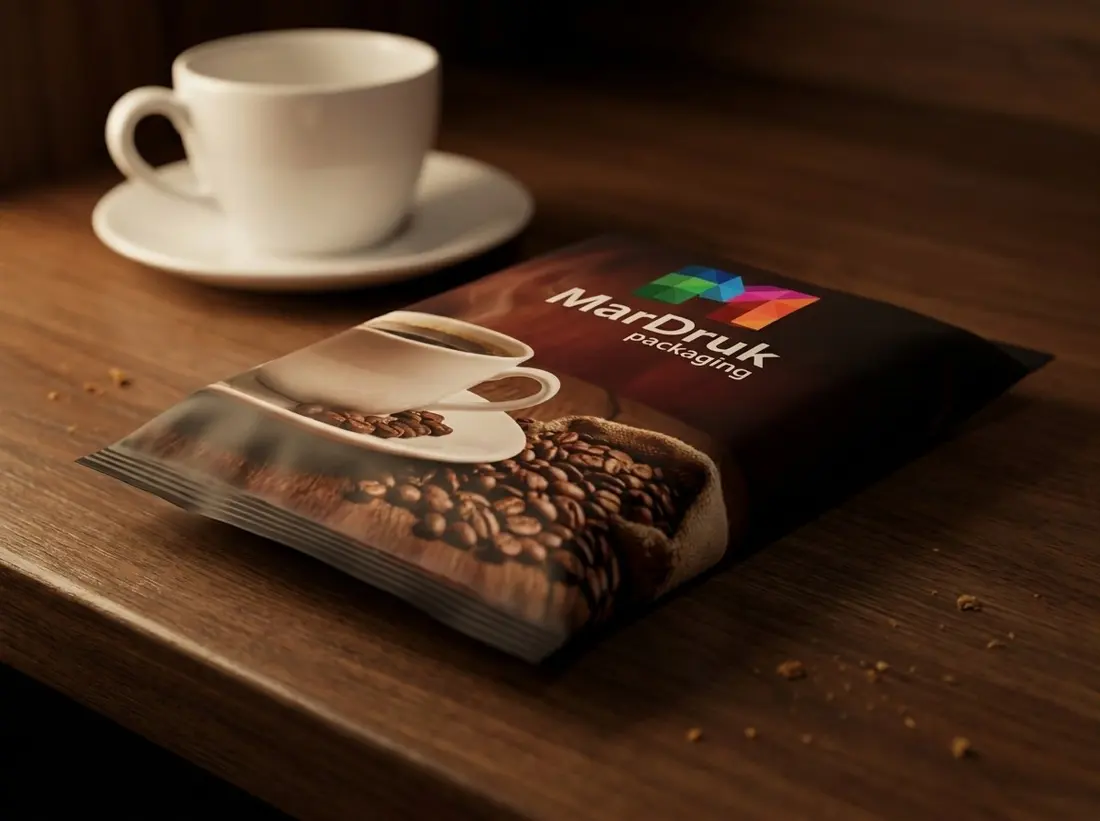
Designing artwork for matt BOPP film — practical tips
• Contrast textures: glossy accents (logo, claim) against a matt background emphasise the key elements.
• See-through windows: on matt they look natural — use a thin frame or a soft transition.
• Codes and dates: leave a light background low in colour; matt improves scanning legibility.
• Colour palette: on matt, 'full' colours play better than extremely light pastels without a backing white.
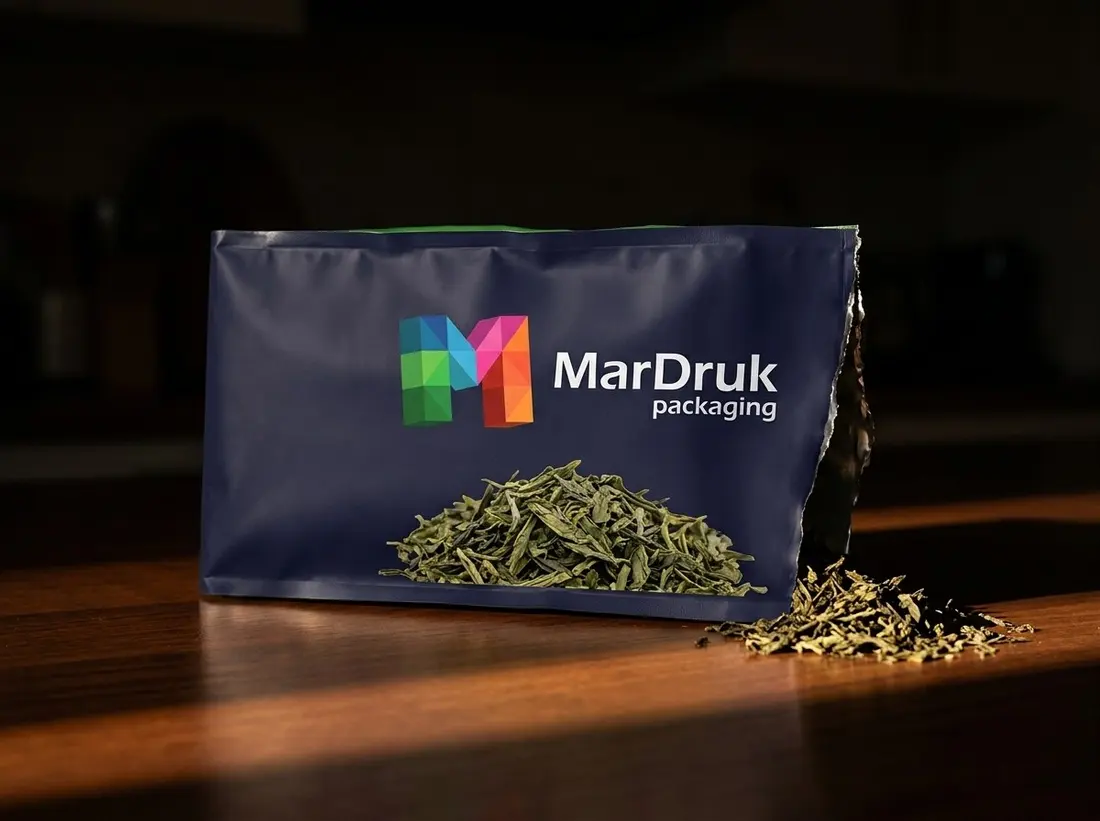
Summary — matt BOPP film that looks premium and works without surprises
If you are looking for a material that sells by its look and at the same time delivers in production, choose matt BOPP film designed for your product and process. We will select the structure (including mono PP/PP), the barrier, COF and seal, and combine HD multi-colour print with the pack's function.
Take the next step:
• Order a free consultation and specification (structure, matt/gloss, anti-fog, windows).
• Order samples and a pilot run to confirm the parameters on your machine.
• Get a fast quote with a deadline that keeps to the calendar.
Write or call — we will reply quickly and to the point.
Frequently asked questions
Matt BOPP film is a biaxially oriented polypropylene film with reduced gloss, obtained through appropriate modifications of the surface or structure of the material. Compared with standard glossy BOPP film it is distinguished by a different level of coefficient of friction, a different optical effect and specific properties in the adhesion of inks, varnishes and adhesives.
Matt BOPP film is most often used as the outer layer in laminates, where it is responsible for the visual effect and partly for the mechanical properties of the pack. It can be combined with materials such as CPP, PE, PET or metallised films, depending on the requirements for barrier, sealability, stiffness and the final purpose of the pack.
Yes, matt BOPP film can be used successfully in flexographic printing and in lamination processes, but it requires the technological parameters to be properly matched. The level of surface tension, print preparation, the choice of inks, adhesives and drying conditions are of key importance, because a matt surface can react to the process differently from a classic glossy film.
When selecting matt BOPP film you should take into account the material thickness, the mechanical properties, the level of matting, the surface tension, the dimensional stability and compatibility with the planned printing and lamination technology. The final pack's requirements for abrasion resistance, stiffness, coefficient of friction and the behaviour of the material on the packaging line also matter.
Matt BOPP film, despite its visual qualities, can show greater sensitivity to surface damage, abrasion or changes in the visual effect depending on the processing and usage conditions. In technological practice, attention should be paid to the appropriate choice of rewinding, lamination, pressure and packing conditions, in order to keep the process stable and preserve the expected look of the final pack.
Sounds like your project?
Write or call — our technologist will advise on the structure and quote your volume within 24 hours.
Free quote +48 731 819 963 office@mardrukopakowania.pl