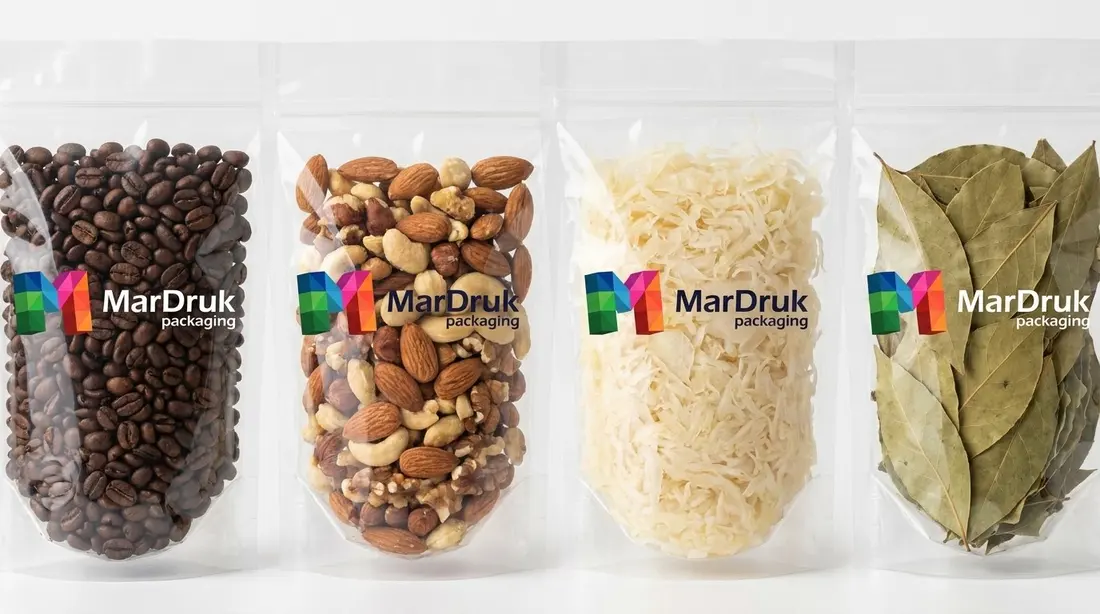
PET film — what it offers in packaging
The biggest advantage of PET is that the material is stable and "holds its shape". Thanks to this, PET film behaves well in lamination and in printing, and it improves the perceived quality of the packaging. Compared with many polyolefin films, PET is usually stiffer, which helps guide the material on the machines and maintain the appearance of the finished packaging.
In practice, PET is also chosen when the customer wants better resistance to surface scratching, more stable print or simply a "harder" pack that suggests a higher-quality product.
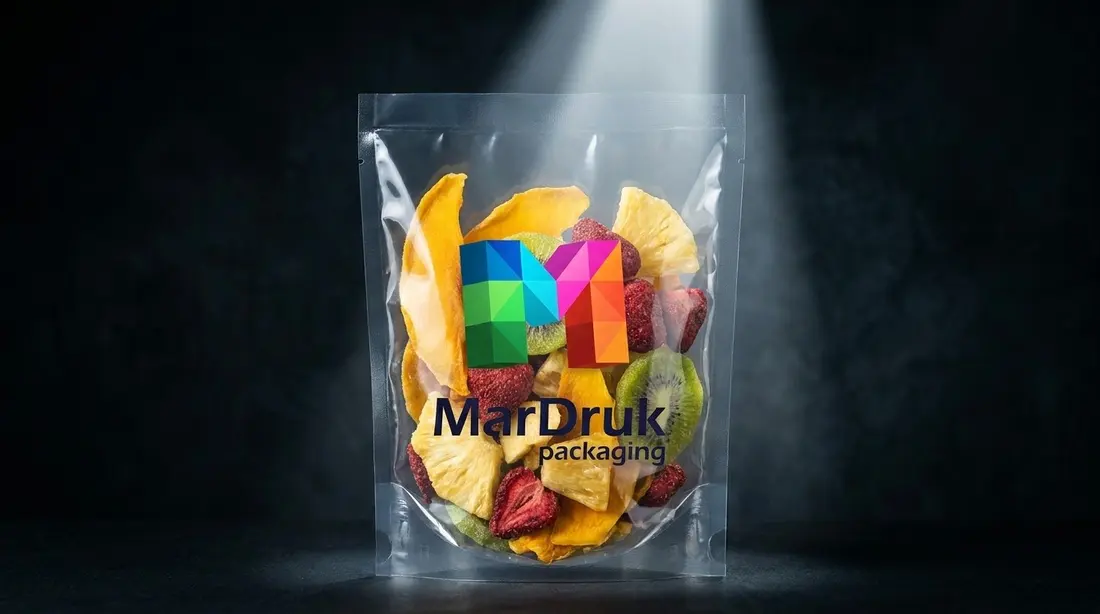
PET film packaging — the structures it most often appears in
In most cases, PET film packaging is not made from PET as the only layer. PET very often acts as the outer layer in a laminate, with the whole structure chosen for the product and the process. Typical applications are laminates where PET is responsible for stiffness and print quality, while the inner layer handles sealing and contact with the product.
That is why, when we talk about packaging for automats or packaging that has to stay tight, the key is to select the whole structure, not just "PET on the outside". It is the structure that determines the seal, the resistance and the behaviour on the line.
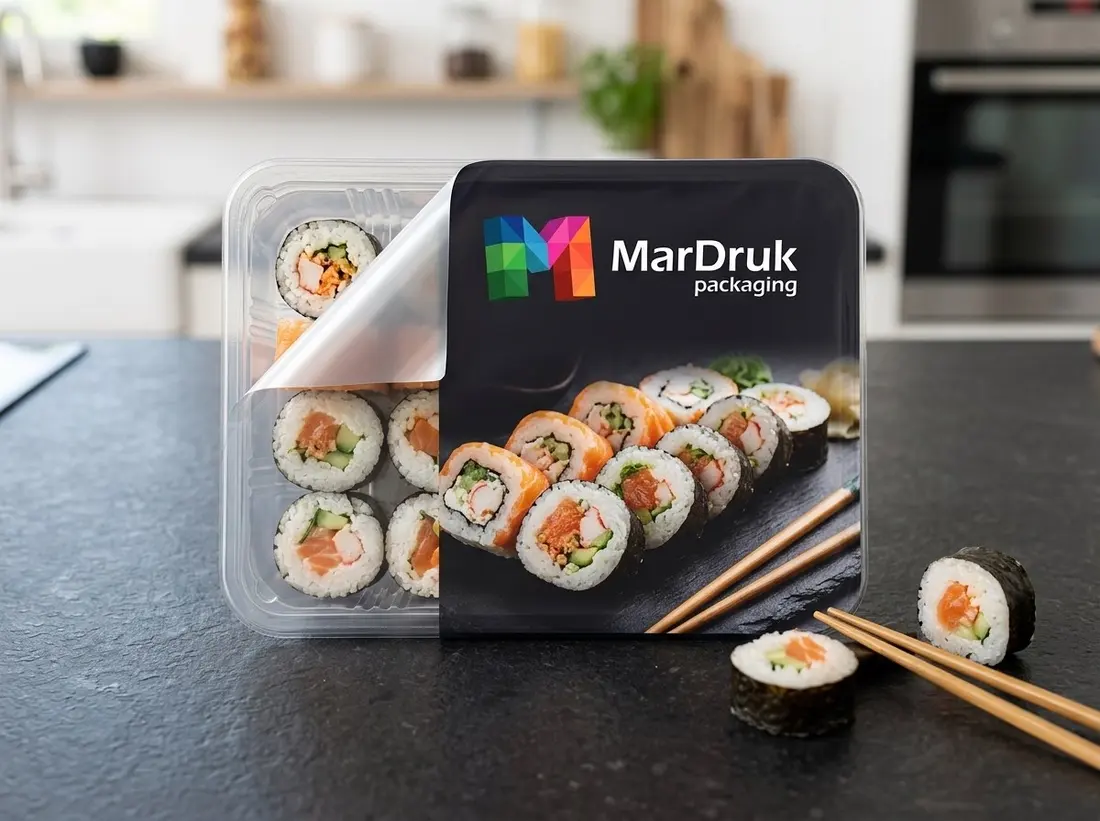
PET film and printing — why it is often chosen for print
From the point of view of aesthetics, PET film is a very good "carrier" for graphics. It delivers a clean, professional look, and the print is more predictable than on materials that "work" a great deal. If the packaging is to be premium and the graphics are to look good in every batch, PET often appears as part of the structure.
In printed packaging production you will most often come across flexographic printing, which works well on films and for larger runs. What is key, however, is not only how we print, but also how we control repeatability of colour and register, because that is what decides brand consistency in practice.
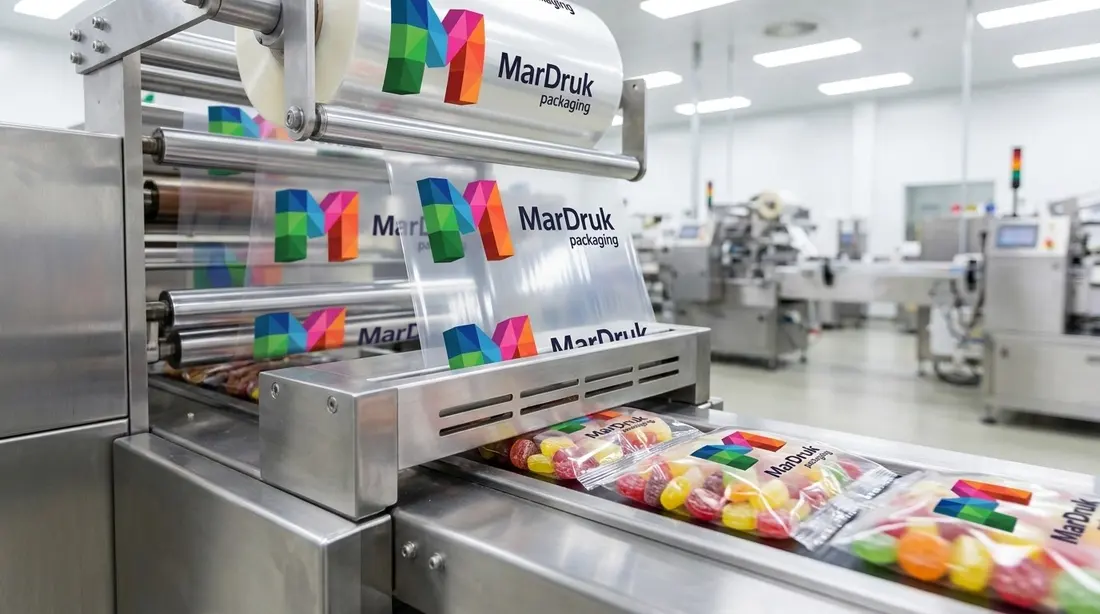
Where PET film works best
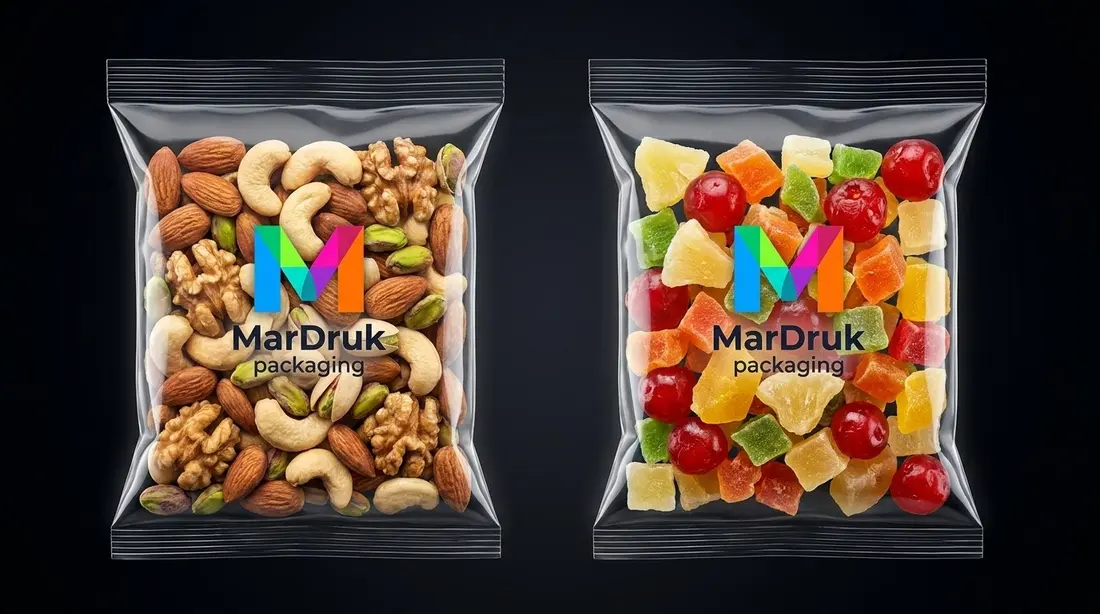
PET is popular in packaging for the food sector, pet food, cosmetics and technical products. In many cases PET is chosen when the packaging is to be stiffer, present better and run stably on the machine. If a product is logistically demanding, PET as an outer layer can also improve the packaging's resistance to the everyday "rubbing" of transport and storage.
PET film and automatic packing — what to look out for
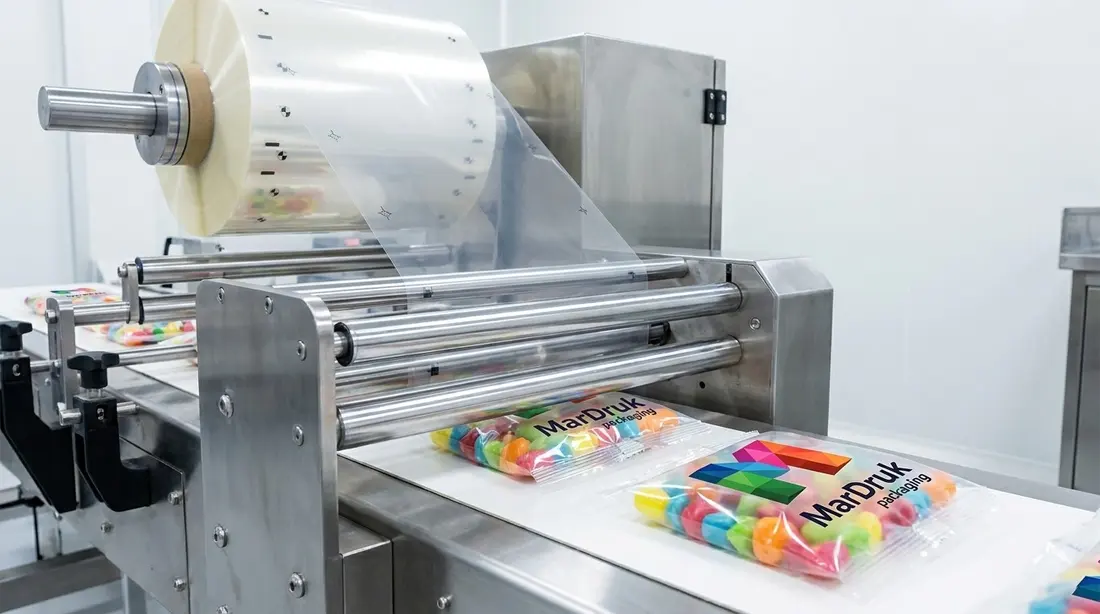
If you pack on an automat, repeatability counts. The packaging has to pass through the line without surprises, which is why the parameters of the whole structure are key: tracking, sealing, as well as print registration and running under the photocell. PET can support stability, but using PET alone will not solve problems if the sealant layer or the laminate structure is poorly chosen.
That is why, at rollout, it is worth taking a practical approach: select the structure for the product, make samples and confirm performance on the specific line. That is the simplest way to avoid losses on a large batch.
Summary
PET film is a good choice when you need stability, stiffness and a better visual effect. In practice, PET film packaging most often takes the form of multilayer structures in which PET acts as the outer layer responsible for appearance and stability, while the remaining layers provide the seal and the protective function. If you want to roll out PET packaging for your product and packaging line, get in touch — we will select the structure, prepare a quote and propose samples for testing.
Take the next step:
• Order a free consultation and specification (substrate, activation, perforation).
• Order samples and a pilot run.
• Get a fast quote and a delivery plan that keeps to the calendar.
Write or call – we will reply quickly and to the point.
Frequently asked questions
PET film is a material with high stiffness and stability. It is chosen when aesthetics, print repeatability and a more solid "feel" of the packaging matter.
Most often not. PET is usually the outer layer in a laminate, with the inner layer handling the seal and contact with the product. The structure is chosen for the application.
Yes, but it is important to match the whole packaging structure to the machine. What counts is tracking, the sealing window and batch repeatability, not the mere fact of using PET.
Yes. We produce printed packaging and keep colour and register repeatable, so that successive batches look consistent.
Yes, we make print versions for different product variants (e.g. flavours, pack weights, seasonal editions). It is best to give the number of versions and the planned quantities for each — we will then advise the most cost-effective production split and prepare a quote.
Sounds like your project?
Write or call — our technologist will advise on the structure and quote your volume within 24 hours.
Free quote +48 731 819 963 office@mardrukopakowania.pl