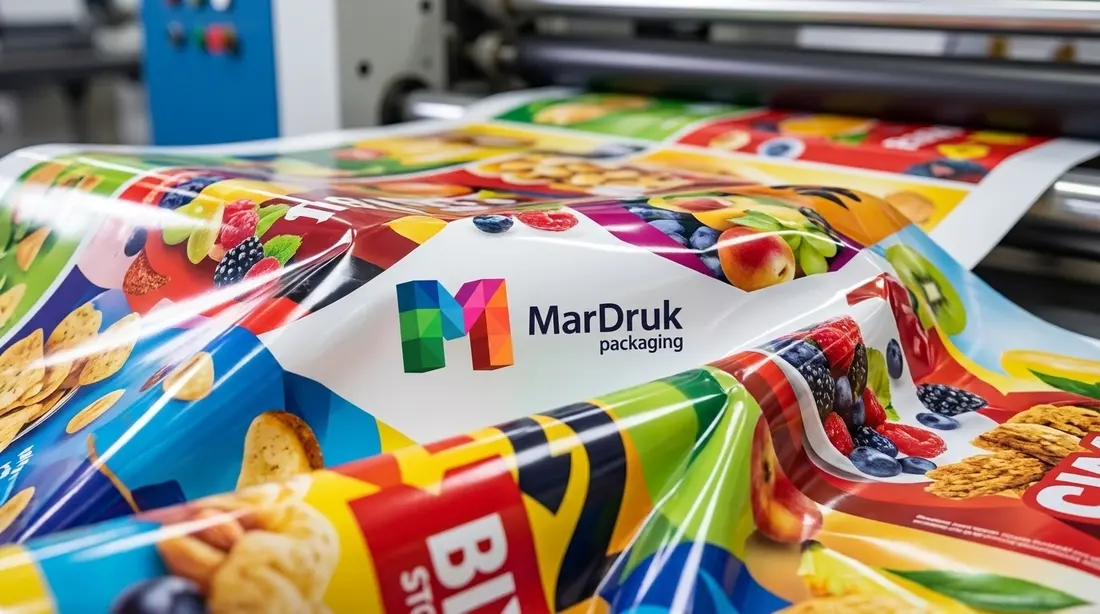
What printing on film offers in B2B packaging
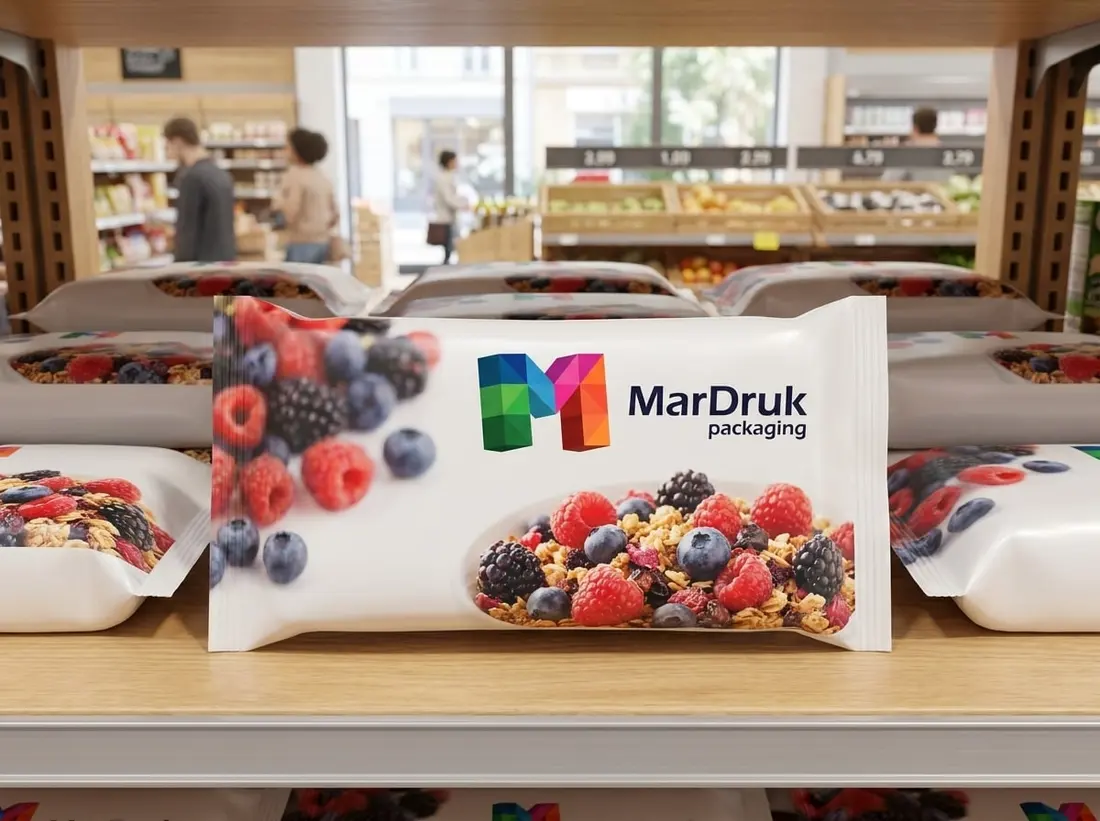
In companies that sell a product in series, the packaging is often the customer's first contact with the brand. Printing on film lets you build a consistent look, emphasise product quality and stand out on the shelf or in e-commerce. On top of that, print makes logistics easier — you can carry product variants, pack weights, markings and elements that aid picking.
In practice, print is also a way to reduce mistakes in the warehouse, because different versions of a product are clearly distinguished. This is especially important when one line produces several flavour, size or seasonal variants.
Printing on film and production — what matters when you pack automatically
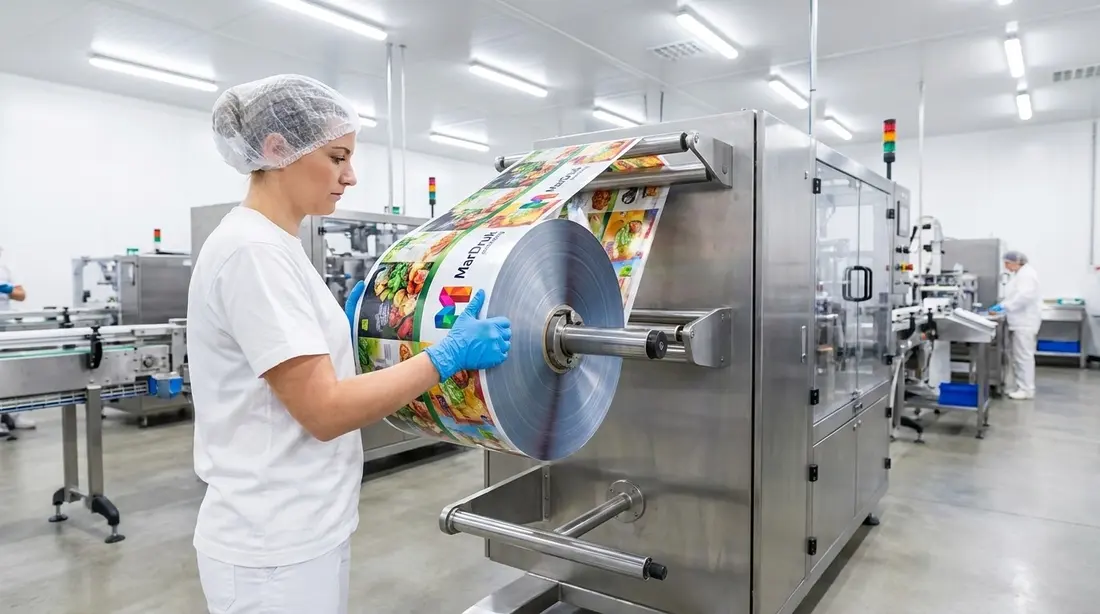
If you pack on a machine, the print has to be predictable. Problems most often arise not because "the print is ugly", but because the material or the register does not hold its parameters. Waste then rises and the line starts to slow down.
In automatic packing, print registration matters, as does the repeatability of the marks for the photocell, if the machine requires them. Add to that the stability of the film itself — thickness, tracking, behaviour at the sealing temperature. That is why we treat print and material as a single project, because in practice it is a single process.
The most common technologies: flexographic printing on film
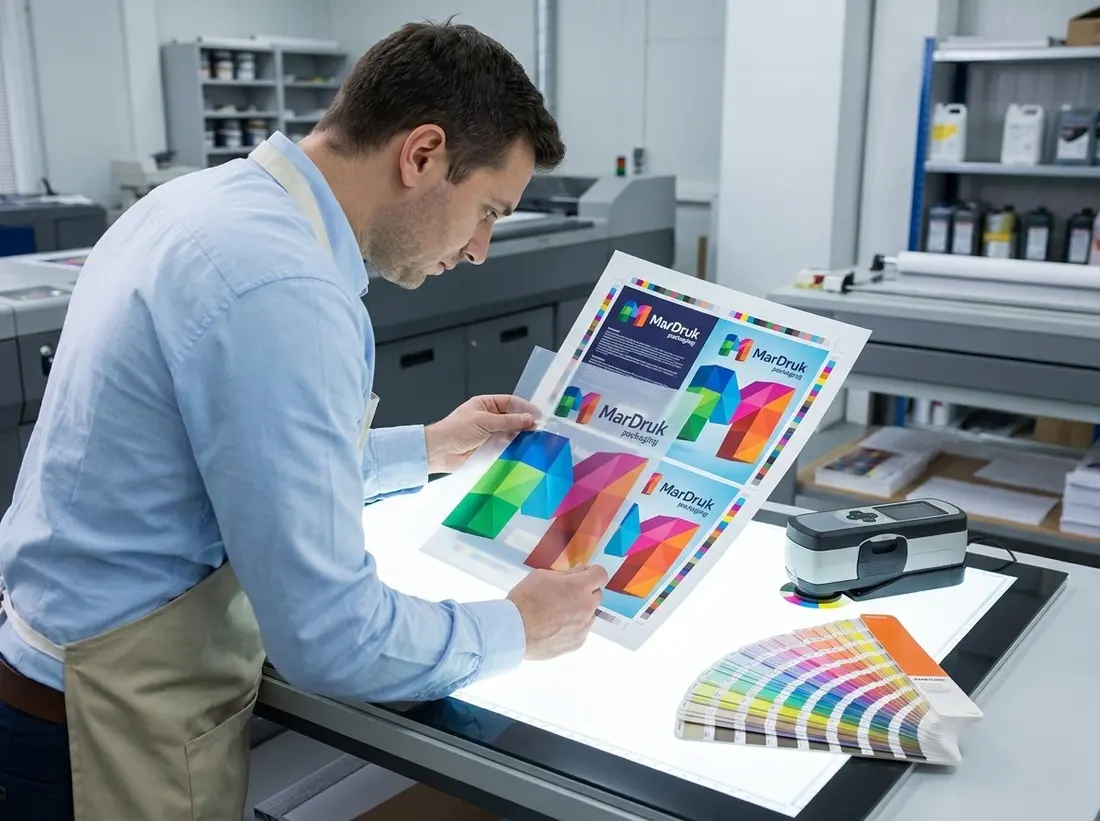
In packaging production, flexographic printing is the most commonly used. It is a proven technology for larger runs, works well on films and delivers a repeatable result batch after batch. For the customer this means stability and predictability — provided the files are correctly prepared and the acceptance benchmark is clear.
Whatever the technology, the key is how repeatability of colour and register is controlled. In demanding sectors, where a brand's appearance counts, the difference between "good" and "premium" often comes down precisely to control of the detail.
Printing on film and material selection — why it matters more than most companies assume
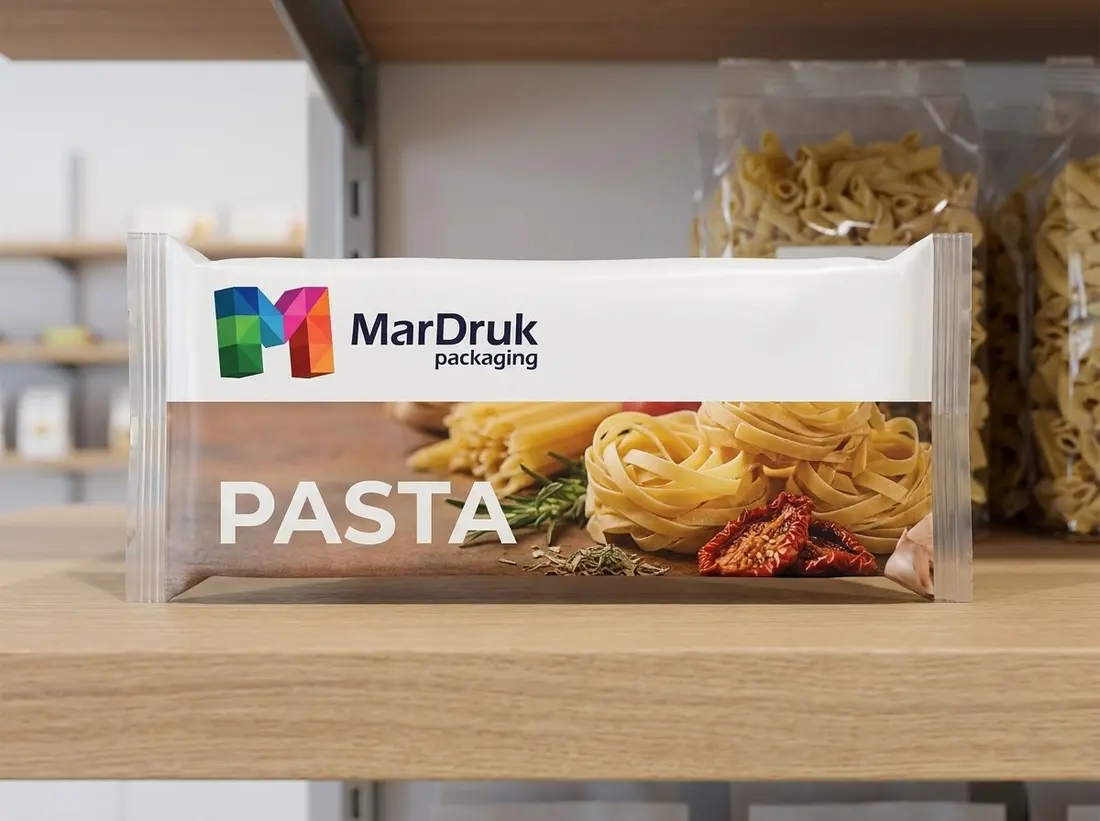
A common mistake is to treat the print and the film as two independent topics. In practice, the material affects how the print looks and how it behaves. You will get a different result on a stiffer structure than on a more flexible one. The differences can also concern resistance to scratching in transport and how the packaging "holds its shape" after filling.
If the product needs a barrier or is to have a longer shelf life, the packaging structure is chosen for moisture, oxygen or aroma loss. The print then has to be matched to the whole structure, not just made "to look nice".
What ordering looks like — what is needed to quote printing on film
To prepare a specific quote for printing on film, we need a few pieces of information. The most important are the format and dimensions, the planned quantity and the intended use of the packaging. If you pack automatically, information about the type of machine and the sealing method is important. In addition, a print file is needed.
If you have a sample of your current packaging, it is worth sending it. That is the quickest way to establish the material's parameters and avoid mistaken assumptions.
Summary
Printing on film is a great tool for building a brand, but in B2B the technical side counts too. The print must be repeatable, the register stable, and the film matched to the packing and sealing. As a manufacturer of printed film packaging, we bring these elements together in a single process, so that you receive packaging that looks good and works without surprises. If you want a quote or want to match a solution to your line, send us the format, quantity and intended use — we will come back with a specific proposal.
Take the next step:
• Order a free consultation and specification (substrate, activation, perforation).
• Order samples and a pilot run.
• Get a fast quote and a delivery plan that keeps to the calendar.
Write or call – we will reply quickly and to the point.
Frequently asked questions
We print on films used in packaging, matching the material to the product and the packing method.
We most often carry out flexographic printing, because it works well on films and in series production and delivers a repeatable result.
Yes, provided the material and print are matched to your machine. The key factors are registration, film stability and the sealing window.
Yes. If your packaging machine requires an eye mark, we include it in the artwork and keep the registration repeatable.
We work to an agreed benchmark and acceptance process. This keeps subsequent deliveries consistent in colour and appearance.
Yes. We can check your files and prepare them for print.
Yes. We produce many variants within a single product line. Give us the number of versions and the quantity per variant — we will suggest the best split.
The minimum depends on the format, the number of colours and the technology. Once you give us the dimensions and quantity, we will determine the minimum run for your project.
Format/dimensions, quantity, intended use, packing method (manual/automatic) and a print file.
Sounds like your project?
Write or call — our technologist will advise on the structure and quote your volume within 24 hours.
Free quote +48 731 819 963 office@mardrukopakowania.pl