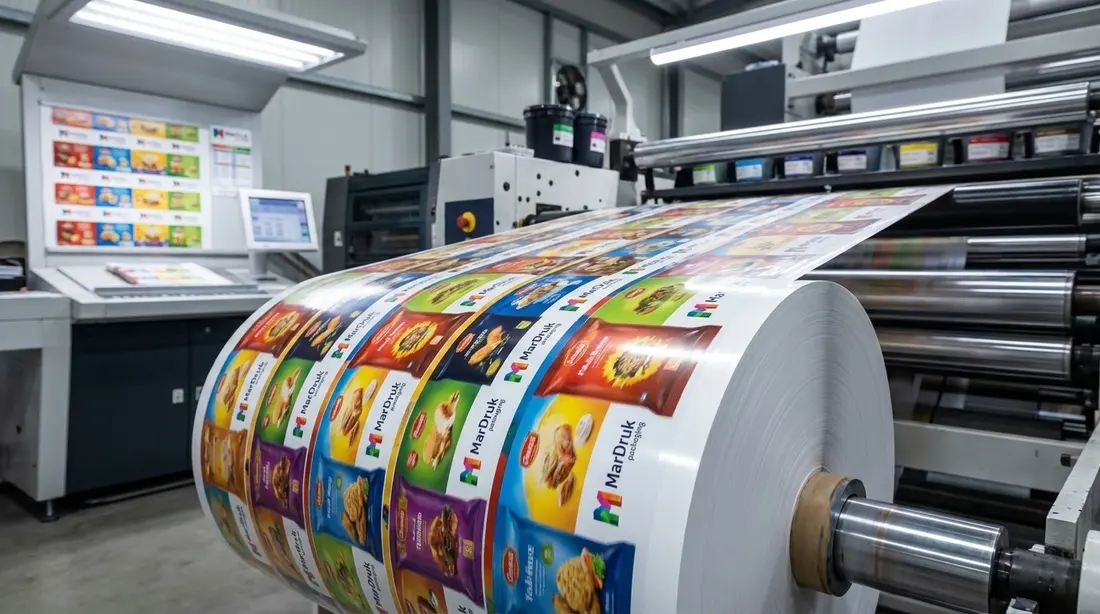
Why flexographic printing on film?
Film (polypropylene, polyethylene, polyester, oriented polypropylene) carries colours and detail beautifully, and flexographic printing reproduces artwork precisely on short runs and at sensible prepress costs. Flexible printing plates, fast-drying inks and web stabilisation mean that even demanding designs look clean and even, with repeatability maintained from batch to batch. For the purchasing department that means less risk, and for engineering — fewer adjustments on the packaging lines.
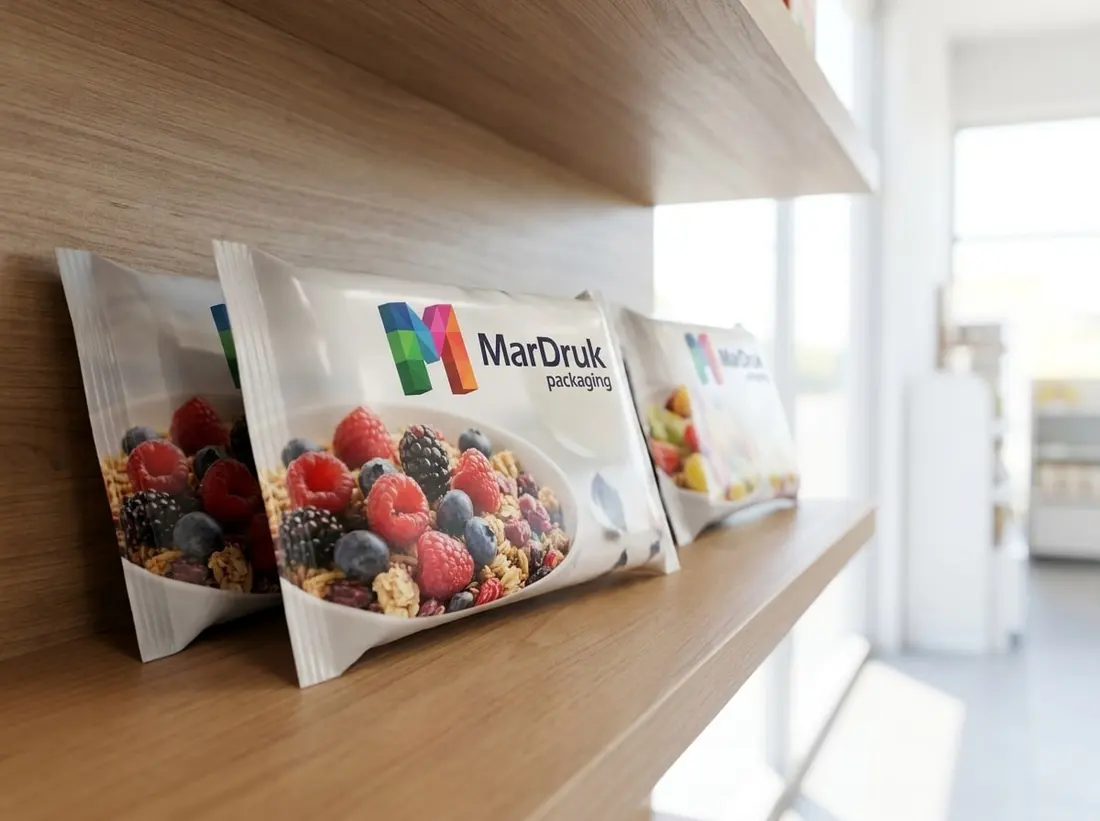
Flexographic printing — quality and repeatability in production
The result is not decided by aesthetics alone, but above all by repeatability: stable colour registration, web-tension control, clean start-ups and a predictable finish. Continuous image inspection systems keep every run consistent with the approved sample, while less waste and shorter set-up times translate into real savings in time and cost. This approach shortens the delivery window and makes production planning easier on the customer's side.
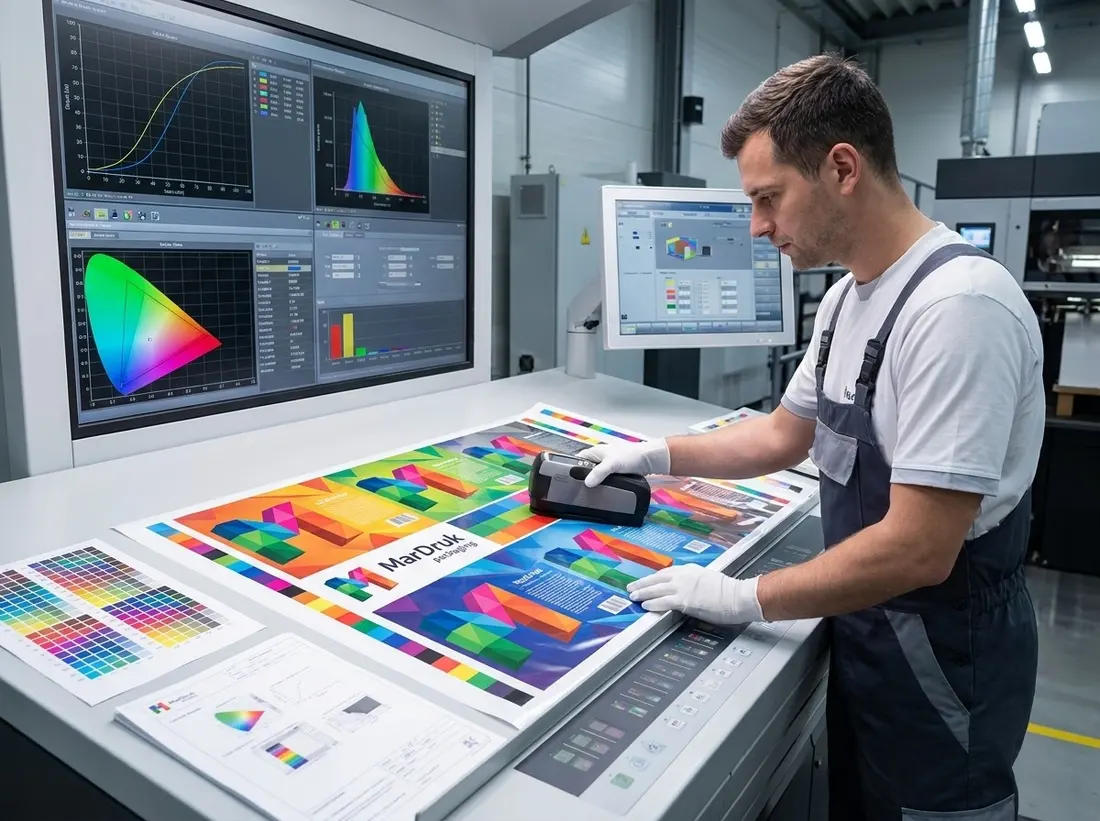
Multi-colour flexographic printing on film — scope, palette and visual effects
Multi-colour flexographic printing on film covers the needs of the vast majority of brands: full-colour compositions, fine typefaces, codes and opaque white areas. The visual effect can be reinforced with a matt/gloss contrast and with a 'metallised look' in the laminate, while retaining the full functionality of the pack. What matters is the deliberate management of colour tolerances and the backing white, so that every delivery looks identical on the shelf.
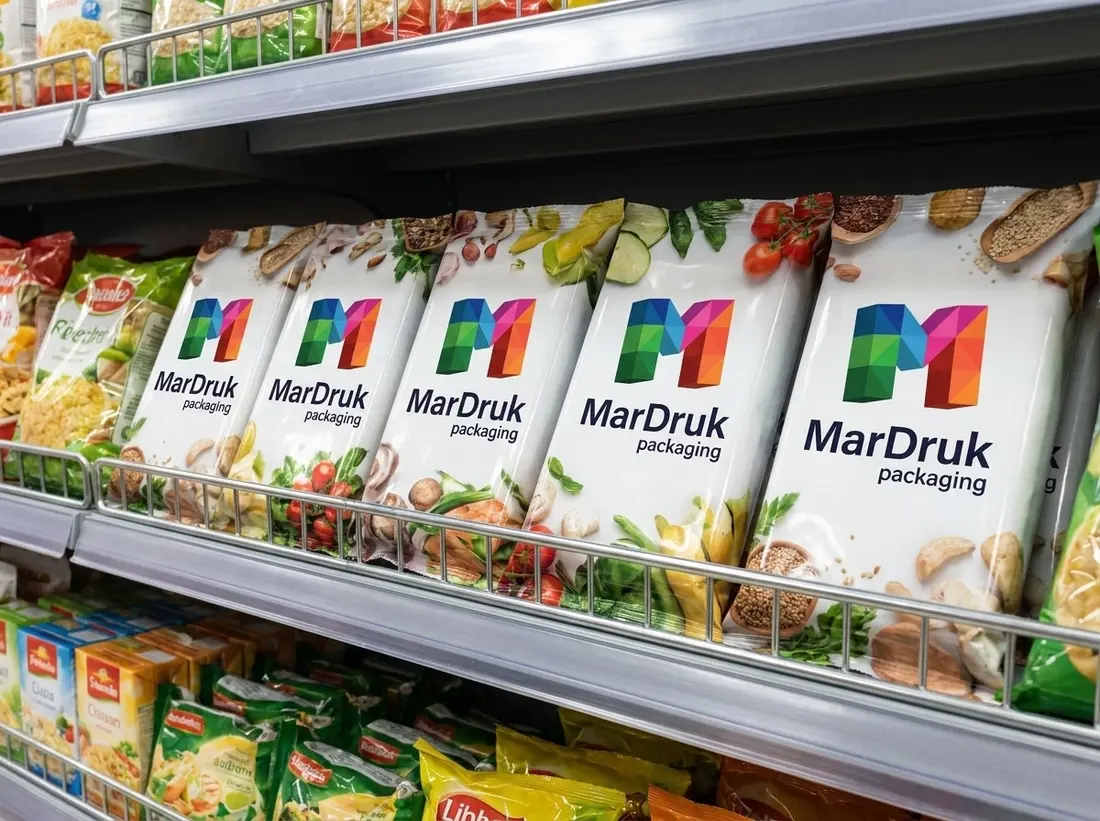
Functionality and flexographic printing on film
The right material means stable production and fewer line stoppages. For fresh and chilled products we select a barrier against oxygen and water vapour; for vegetables and salads an anti-fog coating works well; for trays — easy opening. We design structures for vertical and horizontal form-fill-seal machines and for tray sealing. We match the coefficient of friction together with the strength and temperature of the seal so that the line runs smoothly, without micro-stops or rejects.
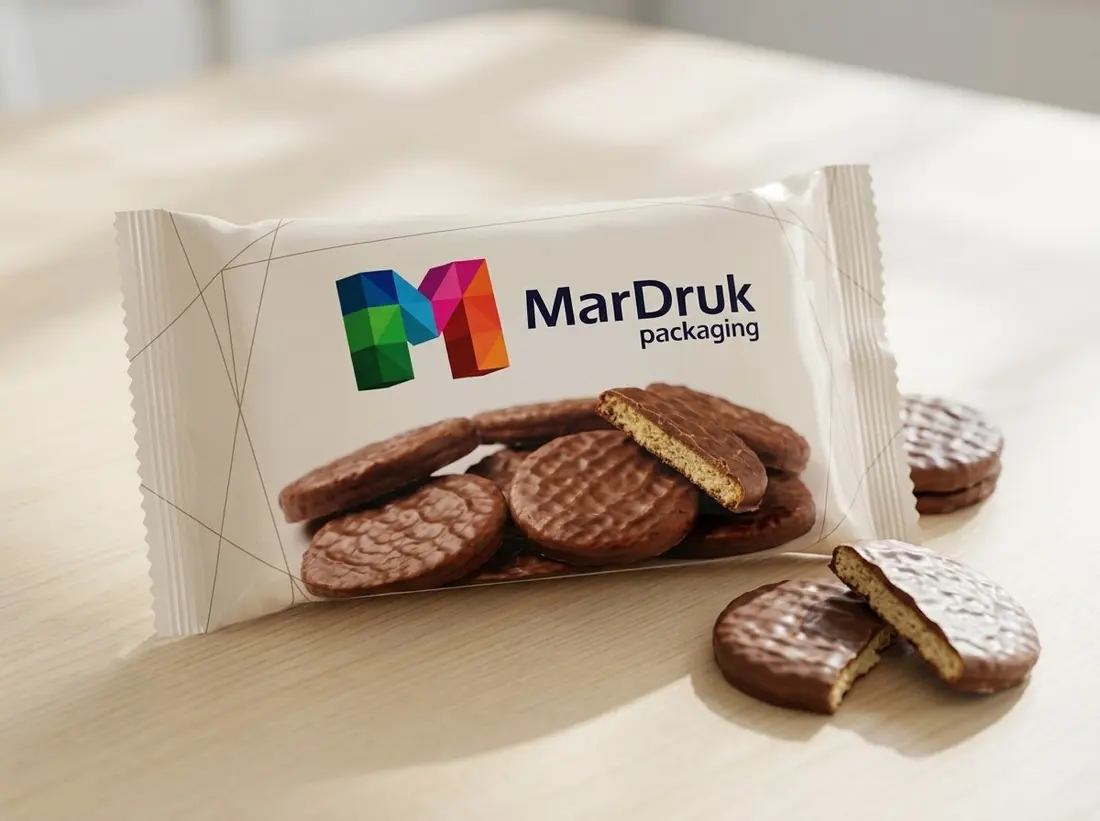
Fast roll-outs and a lower start-up cost
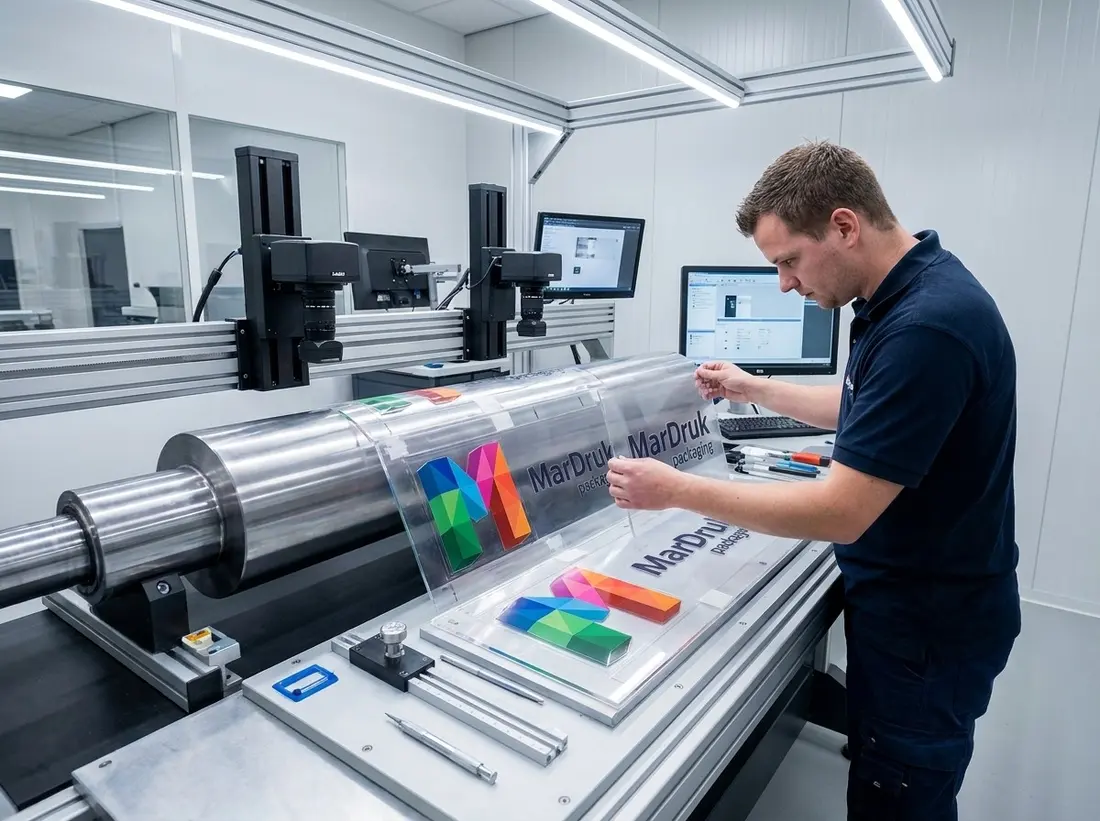
We produce the printing plates in-house, which shortens the path from file to production. Short pilot runs let you confirm the parameters on your line before full roll-out. It is a safer way to launch new variants and to respond faster to seasonality and changes in the retail chains. In addition, standardising the anilox rolls, colour sequence and washing procedures reduces changeover time and start-up waste.
Summary — flexographic printing on film
If you need a technology that combines quality, deadline and operational calm, flexographic printing is the right choice. Flexographic printing on film gives you design freedom, while a properly selected structure guarantees performance on the packaging machines. And when the cost-to-effect balance matters, multi-colour flexographic printing on film gives the optimum quality-to-price ratio. The gain from this technology is less risk, fewer stoppages and more good material in the same hour of line time.
Take the next step:
• Order a free consultation and a slitting specification (widths, core, tolerances, packing).
• Order samples and a pilot run to confirm how the material behaves on your unwind.
• Get a fast quote with a deadline that keeps to the calendar.
Write or call — we will reply quickly and to the point.
Frequently asked questions
Flexographic printing is a relief printing technique used mainly to print film, paper, cardboard, labels and other packaging materials. It is valued for its high output, good print quality and the ability to run on a variety of substrates.
Flexographic printing is used above all in the production of film packaging, labels, bags, laminates, and paper and cardboard packaging. It is a technology widely used in the food, cosmetics, chemical and industrial sectors.
The flexographic method allows a wide range of materials to be printed, such as PE, PP and PET films, paper, cardboard and laminates. This makes flexographic printing a versatile solution for many packaging applications.
The main advantages of flexographic printing include high production speed, good repeatability, the ability to print on different materials and cost-effectiveness on larger runs. Another major advantage is the ability to achieve attractive and durable prints.
Yes, flexographic printing works very well on large and medium runs, because it delivers high production output and a favourable unit cost. For this reason it is often chosen by packaging manufacturers handling series orders.
Yes, modern flexographic printing achieves very good print quality, vivid colours and suitable repeatability across the whole process. The final result, however, also depends on the quality of the plates, inks, material and proper preparation of the artwork.
Flexographic printing is particularly popular in the food, cosmetics, pharmaceutical and chemical industries, and in the broad industrial packaging sector. This technology proves itself wherever print durability and production efficiency matter.
Yes, flexographic printing makes it possible to produce packaging with bespoke print matched to a brand's visual identity. It can carry graphics, logos, product information, legal markings and marketing elements.
The final result depends on many factors, such as the quality of file preparation, the type of substrate, the choice of inks, the machine parameters and the quality of the photopolymer plates. Process control and the printer's experience also matter a great deal.
Flexographic printing is a solution that combines efficiency, technological flexibility and the ability to achieve a durable, attractive print. For many companies it is an effective way to produce packaging that protects the product well while supporting its sale.
Sounds like your project?
Write or call — our technologist will advise on the structure and quote your volume within 24 hours.
Free quote +48 731 819 963 office@mardrukopakowania.pl